FeCrAl / Kanthal / Fecral – Description, Specifications, Composition, Properties and Applications
1. Product Description
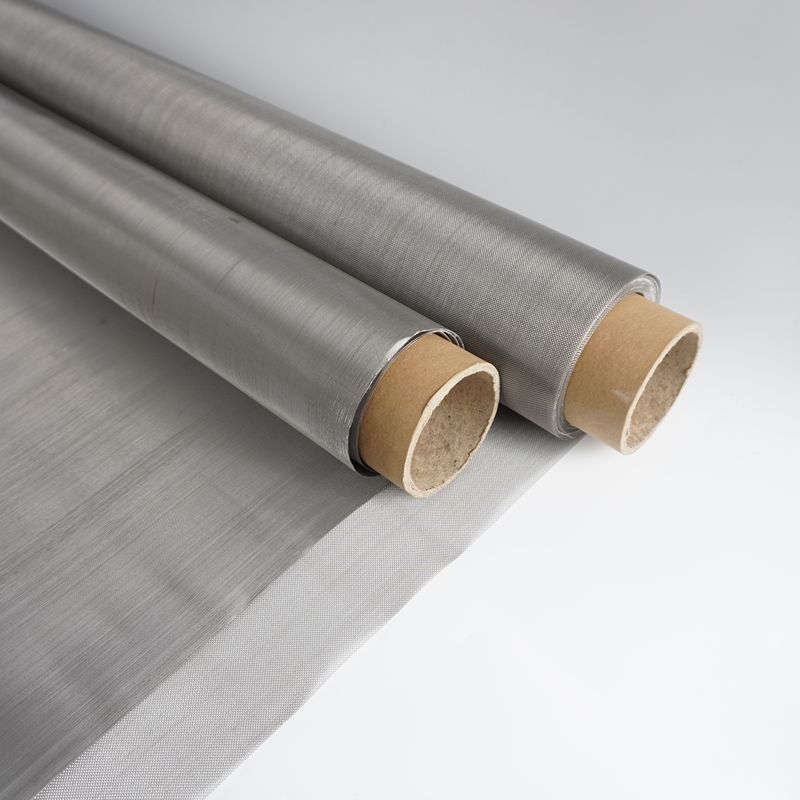
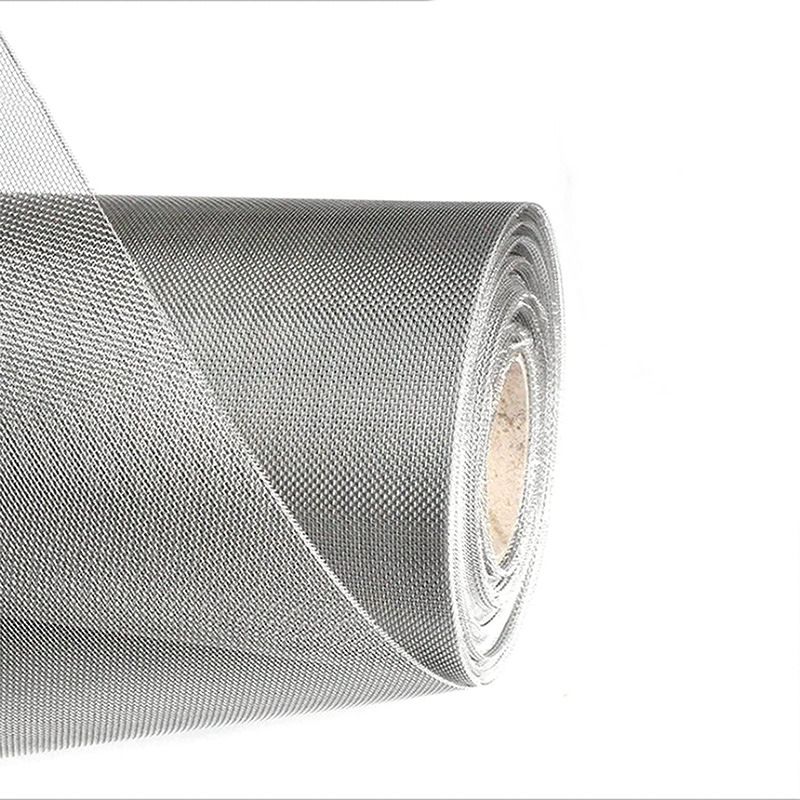
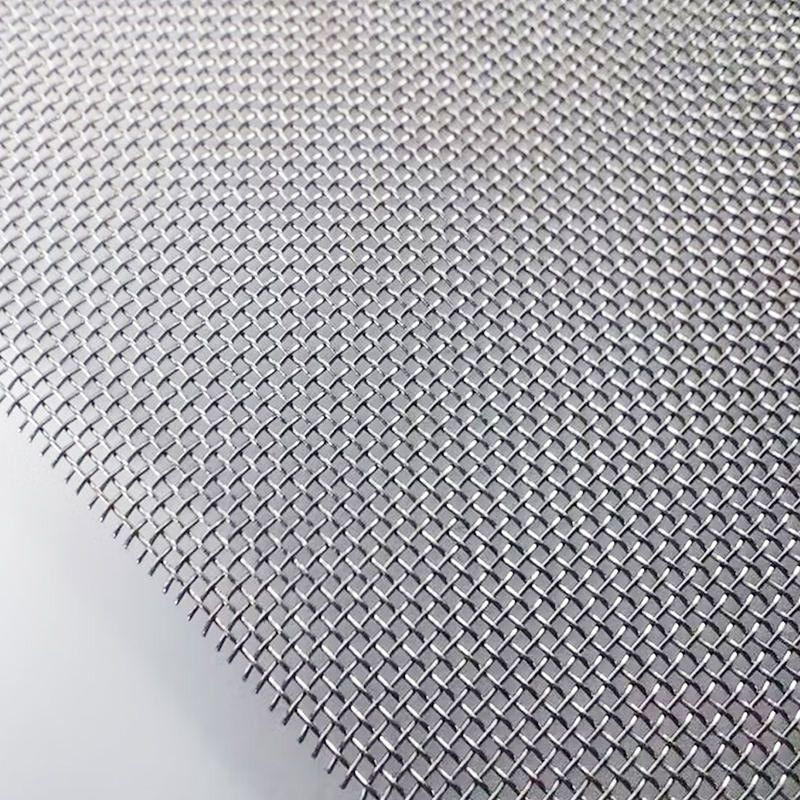
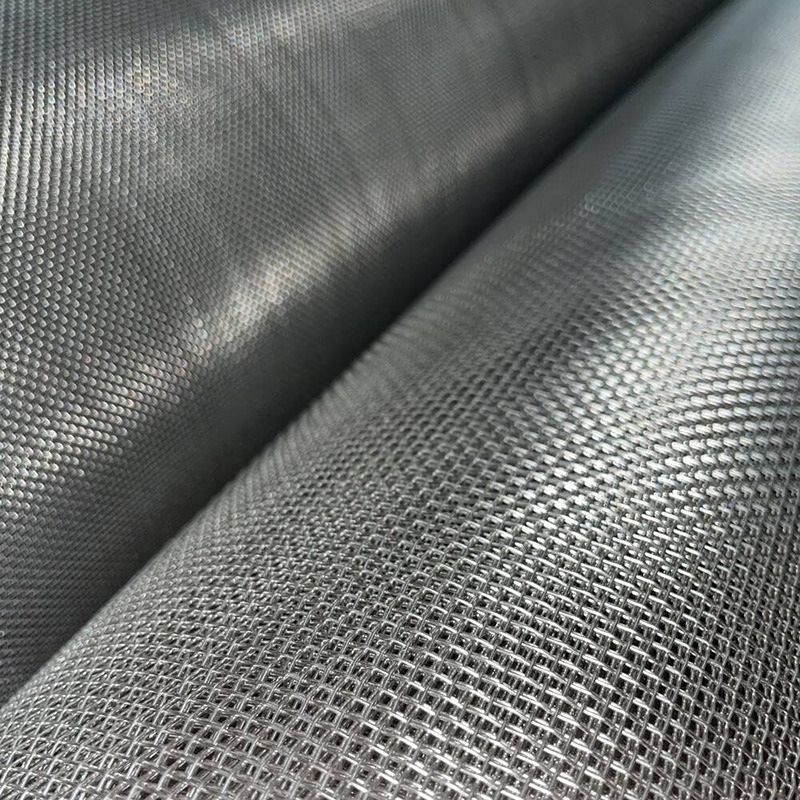
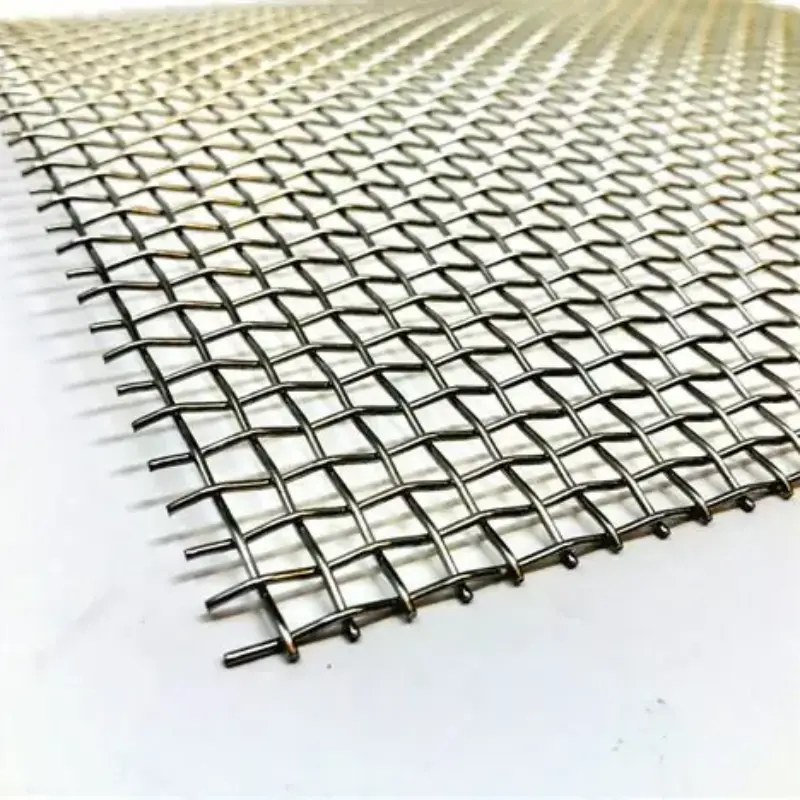
FeCrAl wire mesh (also written Fecral wire mesh, or Fe-Cr-Al alloy wire cloth) is a woven wire mesh made from ferritic iron-chromium-aluminium resistance heating alloy wire. Warp and weft wires are interlaced at right angles on precision wire-weaving looms to form a continuous mesh. Besides woven mesh, the same alloy is also supplied as expanded metal mesh and perforated mesh.
FeCrAl alloys consist mainly of iron, chromium (20–30 wt %) and aluminium (4–7.5 wt %). The alloys are known for their ability to withstand high temperatures combined with intermediate electrical resistance, and are therefore widely used as heating elements. The high chromium and aluminium content produces a tightly adherent protective aluminium oxide (alumina) layer on the surface, which provides oxidation resistance in air and in corrosive atmospheres.
For electrical heating service the material must be stable in air when hot. Aluminium oxide has high thermal conductivity but is an electrical insulator, so special techniques may be required to make good electrical connections to FeCrAl elements.
FeCrAl woven wire mesh has outstanding heating resistance and oxidation resistance. It is mainly used in industrial electric furnaces and household appliances, and is an ideal material for heating and drying duties. Typical uses include gas burners, infrared devices and infrared metal fibre burners, and as the carrier of catalyst on vehicle exhaust systems.
FeCrAl woven wire mesh is commonly offered in rolls. Because the alloy has high resistivity, low density and a low temperature coefficient of resistance, mesh form elements can be designed with high surface load and long service life.
2. Grades and Designations
| Grade |
Cr (%) |
Al (%) |
Max. working temp. (°C) |
Designations / additions |
| 1Cr13Al4 |
12.0–15.0 |
4.0–6.0 |
950 |
W.Nr. 1.4725; GOST Х13Ю4; DIN CrAl 14 4; trademark Alkrothal 14 |
| 0Cr21Al6 |
19.0–22.0 |
5.0–7.0 |
1250 |
– |
| 0Cr23Al5 |
20.5–23.5 |
4.2–5.3 |
1300 |
Popular grade |
| 0Cr25Al5 |
23.0–26.0 |
4.5–6.5 |
1300 |
Popular grade |
| 0Cr20Al6RE |
19.0–21.0 |
5.0–6.0 |
1300 |
Rare-earth (RE) addition |
| 0Cr21Al6Nb |
21.0–23.0 |
5.0–7.0 |
1350 |
Niobium addition of approximately 0.5 % |
| 0Cr24Al6RE |
22.0–26.0 |
5.0–7.0 |
1400 |
Rare-earth (RE) addition |
| 0Cr27Al7Mo2 |
26.5–27.8 |
6.0–7.0 |
1400 |
Molybdenum addition; niobium addition of approximately 0.5 % |
Iron is the balance in all grades. Composition limits above are as published for the FeCrAl resistance heating alloy family. The maximum working temperature of an element in service also depends on wire diameter, surface load, atmosphere and support arrangement. Different published sources quote 1250 °C for 0Cr21Al6, 0Cr23Al5 and 0Cr25Al5 in wire mesh form, against 1300 °C in strip and wire form for 0Cr23Al5 and 0Cr25Al5; the applicable value should be confirmed for the ordered product form.
3. Physical and Electrical Properties by Grade
| Grade |
Max. working temp. (°C) |
Resistivity at 20 °C (μΩ·m) |
Density (g/cm³) |
Thermal conductivity W/(m·K) |
CTE α × 10⁻⁶/°C |
Melting point approx. (°C) |
Continuous service (h / °C) |
| 1Cr13Al4 |
950 |
1.25 |
7.40 |
15 |
15.4 |
1450 |
– |
| 0Cr21Al6 |
1250 |
1.42 |
7.16 |
13 |
14.7 |
1500 |
≥ 80 / 1300 |
| 0Cr23Al5 |
1300 |
1.35 |
7.25 |
13 |
15 |
1500 |
≥ 80 / 1300 |
| 0Cr25Al5 |
1300 |
1.42 |
7.10 |
13 |
15 |
1500 |
≥ 80 / 1300 |
| 0Cr20Al6RE |
1300 |
1.40 |
7.20 |
13 |
14 |
1500 |
≥ 50 / 1350 |
| 0Cr21Al6Nb |
1350 |
1.45 |
7.10 |
13 |
16 |
1510 |
≥ 50 / 1350 |
| 0Cr24Al6RE |
1400 |
1.48 |
7.10 |
13 |
16 |
1520 |
≥ 80 / 1350 |
| 0Cr27Al7Mo2 |
1400 |
1.53 |
7.10 |
13 |
16 |
1520 |
≥ 50 / 1350 |
CTE = average coefficient of linear expansion. All grades have a ferritic micrographic structure and are magnetic. Published melting points for the FeCrAl family range from about 1425 °C to 1520 °C depending on grade.
4. Mechanical Properties by Grade (room temperature)
| Grade |
Tensile strength (N/mm²) |
Elongation at rupture (%) |
Reduction of area (%) |
Hardness (HB) |
Repeat bending (F/R) |
Structure |
| 1Cr13Al4 |
580–680 |
> 16 |
65–75 |
200–260 |
> 5 |
Ferrite, magnetic |
| 0Cr21Al6 |
630–780 |
> 12 |
65–75 |
200–260 |
> 5 |
Ferrite, magnetic |
| 0Cr23Al5 |
630–780 |
> 12 |
65–75 |
200–260 |
> 5 |
Ferrite, magnetic |
| 0Cr25Al5 |
630–780 |
> 12 |
65–75 |
200–260 |
> 5 |
Ferrite, magnetic |
| 0Cr20Al6RE |
630–780 |
> 12 |
65–75 |
200–260 |
> 5 |
Ferrite, magnetic |
| 0Cr21Al6Nb |
650–800 |
> 12 |
65–75 |
200–260 |
> 5 |
Ferrite, magnetic |
| 0Cr24Al6RE |
680–830 |
> 12 |
65–75 |
200–260 |
> 5 |
Ferrite, magnetic |
| 0Cr27Al7Mo2 |
680–830 |
> 10 |
65–75 |
200–260 |
> 5 |
Ferrite, magnetic |
Values are for the annealed condition at room temperature. 1Cr13Al4 minimum tensile strength is 580 N/mm² with a minimum elongation of 15 % for wire above 3.00 mm diameter and 12 % for wire from 0.10 to 3.00 mm diameter.
5. Data for High-Grade FeCrAl Wire (Kanthal type)
| Property |
A-1 type |
AF type |
APM type |
D type |
| Nominal Al (%) |
5.8 |
5.3 |
5.8 |
4.8 |
| Cr (%) |
20.5–23.5 |
20.5–23.5 |
20.5–23.5 |
20.5–23.5 |
| C max (%) |
0.08 |
0.08 |
0.08 |
0.08 |
| Si max (%) |
0.7 |
0.7 |
0.7 |
0.7 |
| Mn max (%) |
0.4 |
0.4 |
0.4 |
0.5 |
| Density (g/cm³) |
7.10 |
7.15 |
7.10 |
7.25 |
| Resistivity at 20 °C (Ω mm²/m) |
1.45 |
1.39 |
1.45 |
1.35 |
| Melting point (°C) |
1500 |
1500 |
1500 |
1500 |
| Max. continuous operating temperature in air (°C) |
1400 |
1300 |
1425 |
1300 |
| Tensile strength, Ø 1.0 mm (MPa) |
760 |
700 |
– |
670 |
| Tensile strength, Ø 4.0 mm (MPa) |
680 |
680 |
680 |
650 |
| Elongation (%) |
20 (Ø 1.0) / 18 (Ø 4.0) |
23 (Ø 1.0) / 18 (Ø 4.0) |
20 (Ø 4.0) |
23 (Ø 1.0) / 18 (Ø 4.0) |
| Hardness (Hv) |
240 (Ø 1.0) / 230 (Ø 4.0) |
230 |
230 |
230 |
| Poisson’s ratio |
0.30 |
0.30 |
0.30 |
0.30 |
| Curie point |
approx. 600 °C |
approx. 600 °C |
approx. 600 °C |
approx. 600 °C |
| Emissivity, fully oxidised |
0.70 |
0.70 |
0.70 |
0.70 |
| Young’s modulus at 20 °C (GPa) |
220 |
220 |
220 |
220 |
A-1, AF, APM and D are the published designations of a leading FeCrAl wire range; the data above are reproduced for reference comparison only and are not a statement of equivalence with any particular Chinese grade. APM type is a powder-metallurgical, dispersion-strengthened variant with exceptionally good form stability and low tendency to ageing and resistance change.
6. Temperature Factor of Resistivity (A-1 type, reference)
| Temp. (°C) |
Factor Ct |
Temp. (°C) |
Factor Ct |
| 100 |
1.00 |
800 |
1.03 |
| 200 |
1.00 |
900 |
1.03 |
| 300 |
1.00 |
1000 |
1.04 |
| 400 |
1.00 |
1100 |
1.04 |
| 500 |
1.01 |
1200 |
1.04 |
| 600 |
1.02 |
1300 |
1.04 |
| 700 |
1.02 |
1400 |
1.05 |
Resistance at temperature = resistivity at 20 °C × Ct. FeCrAl alloys have a notably low temperature coefficient of resistance, which is one of their principal advantages over nickel-chromium alloys in high-temperature element design.
7. Wire Mesh Specifications
- Mesh size: 2–200 mesh (standard production range); the commonly offered range is 8–80 mesh
- Wire diameter: 0.05–1 mm (approximately 21G to 43G)
- Roll width: standard less than 2000 mm; standard stock widths in the specification table below range from 0.6 m to 1.0 m
- Roll length: 30 m rolls, or cut to length with a minimum of 2 m
- Weave types: plain weave and twill weave as standard; Dutch weave variants also available
- Supply forms: rolls, sheets, cut discs, and fabricated filter elements
| Mesh |
Weave |
Wire gauge |
Aperture (mm) |
Wire dia. (mm) |
Roll width (m) |
Weight (kg/m²) |
| 8 |
Twill |
21 |
2.375 |
0.800 |
1.0 |
2.500 |
| 8 |
Twill |
22 |
2.475 |
0.700 |
1.0 |
1.840 |
| 10 |
Twill |
23 |
1.940 |
0.600 |
0.6 |
1.690 |
| 12 |
Twill |
24 |
1.557 |
0.559 |
1.0 |
1.800 |
| 17 |
Twill |
24 |
0.940 |
0.550 |
0.6 |
2.570 |
| 20 |
Plain |
33 |
1.020 |
0.250 |
1.0 |
0.587 |
| 20 |
Plain |
32 |
1.000 |
0.270 |
1.0 |
0.685 |
| 20 |
Plain |
30 |
0.970 |
0.300 |
1.0 |
0.846 |
| 25 |
Plain |
30 |
0.710 |
0.300 |
1.0 |
1.125 |
| 30 |
Plain |
38 |
0.690 |
0.150 |
1.0 |
0.300 |
| 34 |
Plain |
33 |
0.490 |
0.250 |
1.0 |
1.060 |
| 40 |
Plain |
35 |
0.425 |
0.210 |
1.0 |
0.830 |
| 40 |
Twill |
35 |
0.425 |
0.210 |
1.0 |
0.830 |
| 44 |
Twill |
35 |
0.367 |
0.210 |
1.0 |
0.880 |
| 60 |
Twill |
38 |
0.273 |
0.150 |
1.0 |
0.660 |
| 80 |
Plain |
43 |
0.227 |
0.090 |
1.0 |
0.324 |
Standard specification table as published for FeCrAl woven wire mesh. Other mesh count, wire diameter and roll width combinations can be woven to order.
Woven wire cloth is specified by four interrelated parameters – mesh count, wire diameter, aperture (opening) size and weave type. Any three of these determine the fourth.
| Parameter |
Definition / typical practice |
| Mesh count |
Number of warp (and weft) wires contained in one linear inch of cloth |
| Wire diameter |
Diameter of the individual warp / weft wires, stated in mm or inch |
| Aperture (opening) |
Clear distance between adjacent parallel wires forming one mesh opening, usually stated in mm or micron |
| Open area |
Percentage of the total cloth area that is open; calculated from mesh count and wire diameter |
| Weave type |
Plain weave, twill weave, plain Dutch weave, twill Dutch weave, reverse Dutch weave, five-heddle and multiplex weave |
| Supply forms |
Rolls, sheets, cut discs, and fabricated filter elements (cylinders, baskets, screen packs) |
| Roll width and length |
Standard roll width less than 2000 mm; roll length 30 m, or cut to length with a minimum of 2 m |
| Edge type |
Selvedge (woven) edge, cut edge, or reinforced edge |
8. Weave Types
| Weave type |
Construction |
Typical use |
| Plain weave |
Warp and weft wires alternate over and under each other, giving square openings |
The simplest type; often used for coarse mesh and typically serves as the protection layer of coarse filtration and filter media |
| Twill weave |
Each weft wire passes alternately over and under two warp wires, staggered on successive warps |
Generally used for fine mesh; suitable for finer filtration than plain weave |
| Plain Dutch weave |
Warp wire diameter is larger than weft wire; the finer weft wires are driven closer to form a tight filter medium |
Coarse mesh as the reinforcing layer of sintered mesh; fine mesh as the filtration layer |
| Twill Dutch weave |
Combines Dutch and twill weaving; each warp wire passes over and under two fine weft wires, forming tapered or wedge-shaped openings |
Tight woven mesh with smaller opening sizes; reinforcing and filtration layers of sintered mesh |
| Reverse Dutch weave |
Reverse of the plain Dutch wire arrangement; smaller warp wires give a tight structure, larger weft wires give higher strength |
Polymer continuous filter belts; filtration duties requiring extended service life |
| Five-heddle weave |
Every warp wire alternates up and down over each single and four weft wires, and vice versa |
Rectangular openings, high flow rates and good mechanical stability; drainage filtration, paper-making and chemical packing dehydration |
| Multiplex weave |
Multiple layers or strands are interwoven to form a more stable and durable structure |
High-demand applications such as filtration, reinforcement and decoration |
9. Key Characteristics
- Superior oxidation resistance – the alloy forms a protective aluminium oxide (alumina) layer that also gives good protection in corrosive atmospheres and in atmospheres with high carbon potential
- Sulfur resistance and resistance to carburisation (anti-cementite)
- Low specific gravity (about 7.1–7.4 g/cm³) combined with high electrical resistivity
- High surface load capability
- High operating temperature, up to 1400 °C depending on grade and product form
- Low temperature coefficient of electrical resistance, giving stable element performance over a wide temperature range
- Long service life and lower raw material cost than nickel-based resistance alloys
- Ferritic structure; magnetic up to approximately 600 °C (Curie point)
- Emissivity of fully oxidised material approximately 0.70, giving efficient radiant heat transfer
- Excellent form stability (particularly the powder-metallurgical dispersion-strengthened variant), which contributes to long element life and reduces the amount of element support required
- Available as woven wire mesh, expanded metal mesh and perforated mesh
10. Typical Applications
- Electrical heating elements in high-temperature furnaces for the heat treatment, ceramics, glass, steel and electronics industries
- Industrial electric furnaces, kilns and diffusion heaters, including those used in the making of crystalline silicon
- Household appliances: toasters, hair dryers, fan heaters, convection heaters, radiators, tumble dryers, dishwashers, irons and space heating
- Ceramic glass top heaters, boiling plates with ceramic hobs, and ceramic heaters for cooking plates
- Metal sheathed tubular elements, cartridge elements in metal dies, and mica elements
- Heating cables and rope heaters for defrosting and de-icing; industrial infrared dryers; quartz tube heaters
- Porcupine elements for hot air guns, radiators and air heating
- Gas burners, infrared devices and infrared metal fibre burners
- Carrier of catalyst on vehicle exhaust systems
- Drying and heating equipment in metallurgy, colliery, dyeing, food factories, hospitals, high-density board factories and cardboard production
- Heating elements for single crystal diffusion furnaces, powder metallurgy products, sintering furnaces and ceramic calciners
- High-temperature filtration and screening duties where a combination of high temperature use, long life and high resistivity is required
- Household heaters using FeCrAl expanded metal mesh and FeCrAl perforated mesh
11. Applicable Standards
- GB/T 1234-2012 – high resistance alloys for electrical heating (Chinese national standard)
- Rod, bar, wire and forgings: GB/T 1234-2012, ASTM B603-01, DIN 17470-1984, GOST 12766.1-1990, GOST 12766.3-1990, GOST 12766.4-1990, GOST 12766.5-1990
- Plate, sheet and strip: GB/T 1234-2012, ASTM B603-01, DIN 17470-1984, GOST 12766.2-1990
- Other: GOST 10994
- 1Cr13Al4 equivalent designations: W.Nr. 1.4725; GOST Х13Ю4; DIN CrAl 14 4; trademark Alkrothal 14
- For the remaining grades, published chemical composition ranges are given in Section 2. Brand equivalences for individual suppliers should be confirmed before they are quoted to a customer.
12. Ordering Notes
- Please state grade, mesh count, wire diameter, aperture, weave type, roll width and length, quantity and temper (annealed / hard) when requesting a quotation.
- Where three of the four principal parameters (mesh count, wire diameter, aperture, weave type) are known, the fourth can be calculated and confirmed before order placement.
- A simple specification code can be used for quotation requests: material – weave type – mesh count, for example FECRAL-PW-2020 (FeCrAl, plain weave, 20 × 20 mesh).
- Maximum element temperature in service depends on wire diameter, surface load, atmosphere and support arrangement. The values stated in this datasheet are the maximum continuous operating temperatures in air for the material itself and must be confirmed against the actual application.
- All data in this datasheet are typical values given for reference only. Final specification and tolerances are confirmed on the order confirmation.
- Mill test certificates to EN 10204 3.1, third-party inspection and pre-shipment sample approval can be arranged on request.
Supplier
Anping County Bolin Metal Wire Mesh Co., Ltd.
Woven wire mesh, filter cloth and fabricated filter elements.
For quotations, samples and technical support, please contact your account manager.