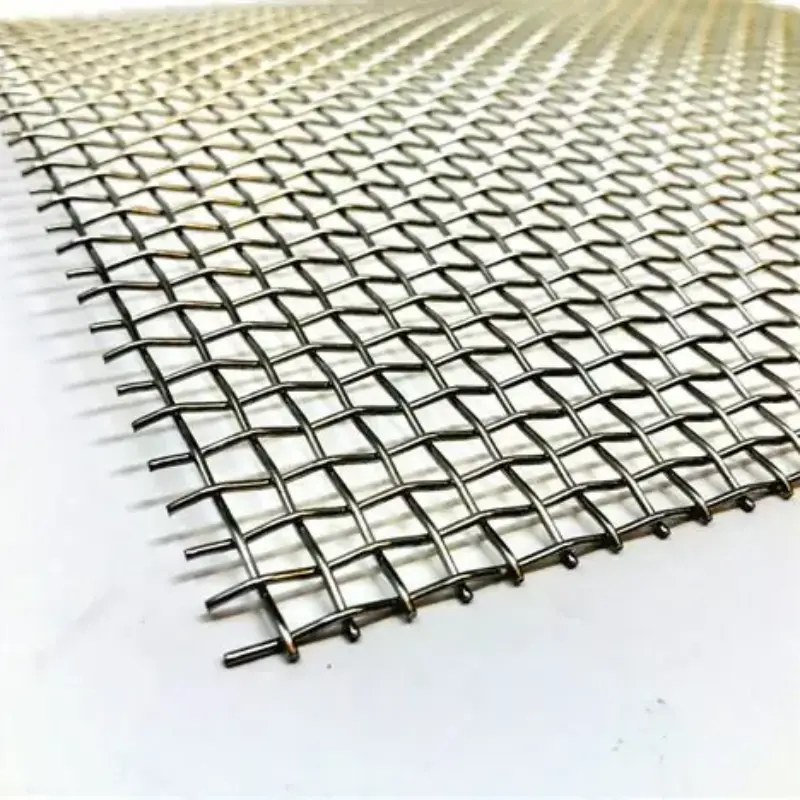
Technical Product Datasheet – Description, Specifications, Composition, Properties and Applications
1. Product Description
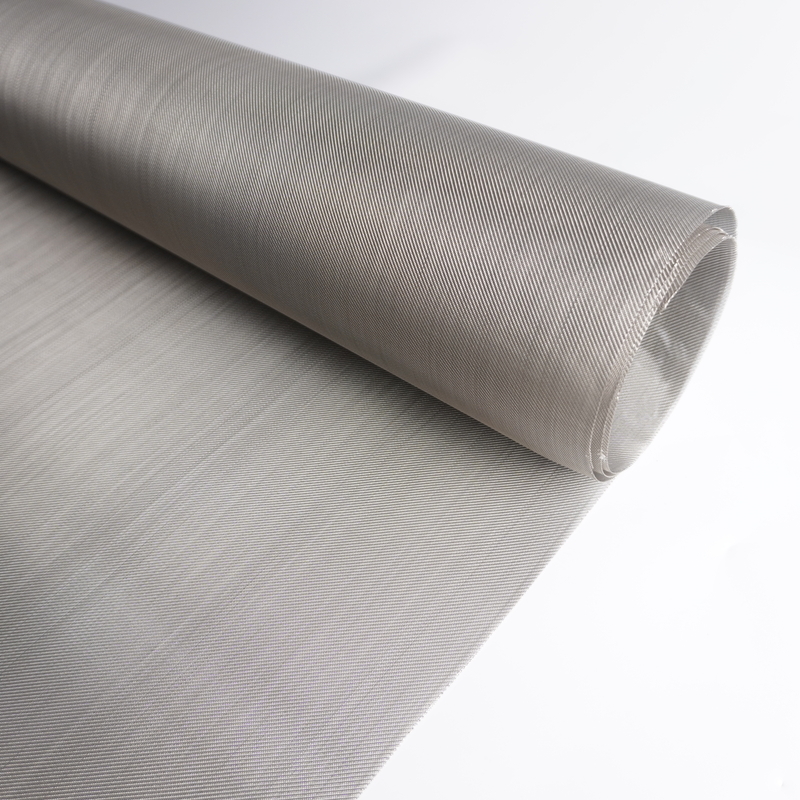
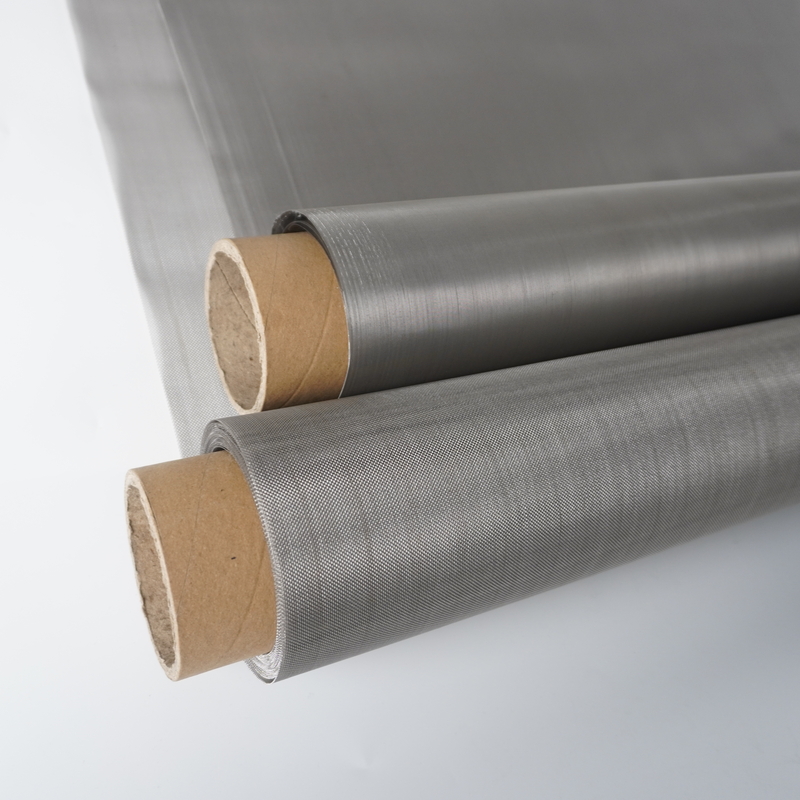
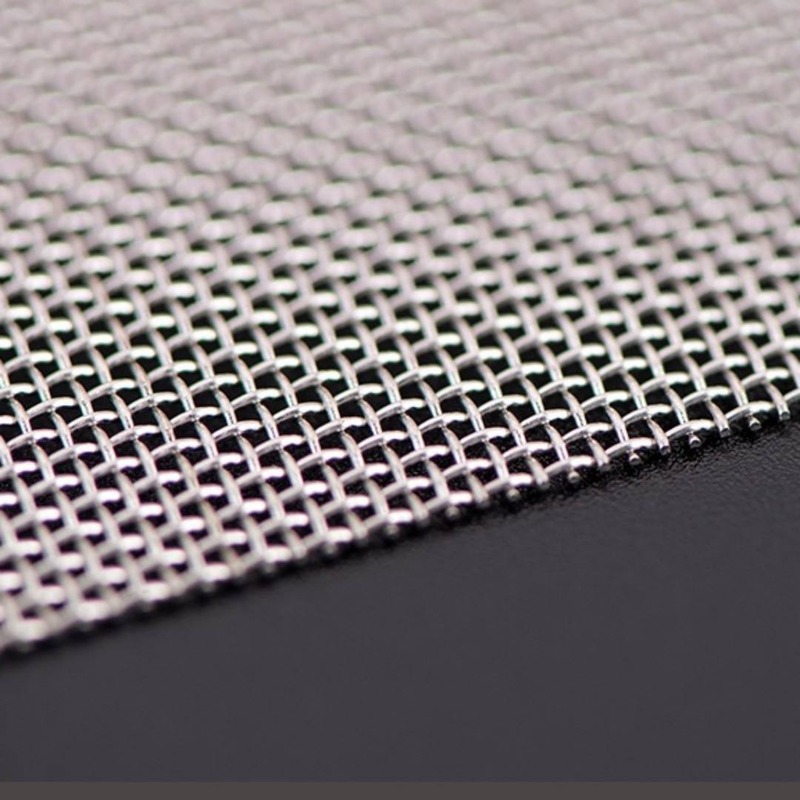
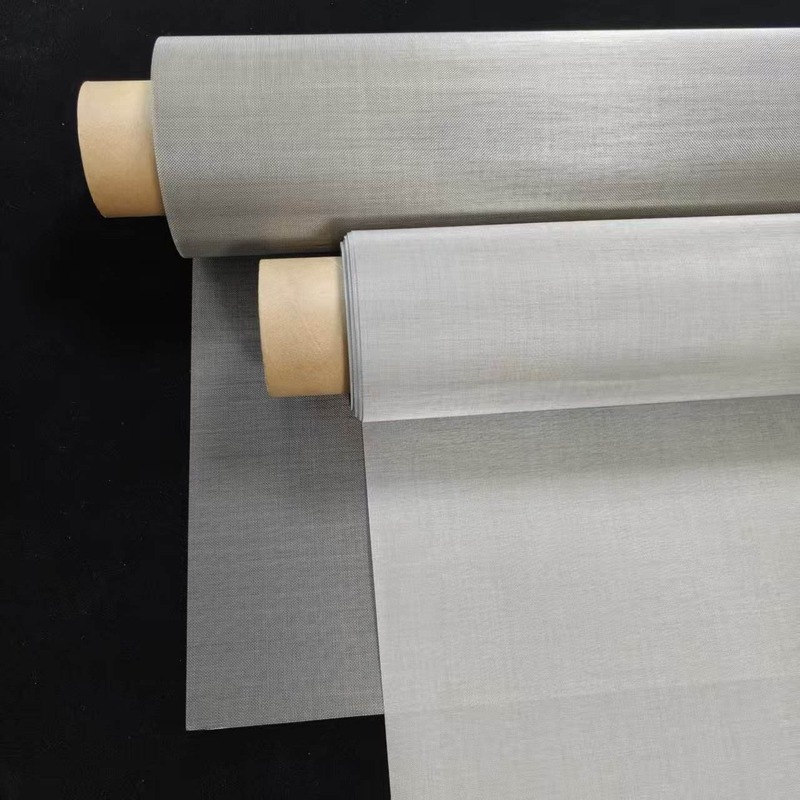
Monel wire mesh is woven from nickel-copper alloy wire on precision wire-weaving looms. The two standard grades are Monel 400 (UNS N04400) and Monel K-500 (UNS N05500).
Monel 400 is a nickel-copper alloy that is resistant to seawater and steam at high temperatures as well as to salt and caustic solutions. It is a solid-solution alloy that can only be hardened by cold working, and exhibits good corrosion resistance, good weldability and high strength.
A low corrosion rate in rapidly flowing brackish water or seawater, combined with excellent resistance to stress-corrosion cracking in most freshwaters and resistance to a variety of corrosive conditions, has led to its wide use in marine applications and other non-oxidising chloride solutions. The alloy is particularly resistant to hydrochloric and hydrofluoric acids when they are de-aerated.
Monel K-500 is an age-hardenable nickel-copper alloy that combines the corrosion resistance of alloy 400 with added strength, hardness, corrosion fatigue and erosion resistance. It is made precipitation hardenable by additions of aluminium and titanium. Compared with Monel 400 it provides considerably higher yield strength (up to about three times) and higher tensile strength (up to about two times), depending on condition.
Monel 400 has excellent mechanical properties at sub-zero temperatures, can be used at temperatures up to 1000 °F (538 °C), and has a melting point of 2370–2460 °F. In the annealed condition the alloy is relatively low in strength, so a variety of tempers may be used to increase strength.
2. Grades and Designations
| Grade |
UNS Number |
W.Nr. |
Other common names |
| Monel 400 |
N04400 |
2.4360, 2.4361 |
Alloy 400 |
| Monel K-500 |
N05500 |
2.4375 |
Alloy K500, Nicorros Al |
3. Chemical Composition (wt %)
| Grade |
Ni |
Cu |
Fe |
Mn |
C |
Si |
S |
Al |
Ti |
| Monel 400 (N04400) |
63.0 min |
28.0–34.0 |
2.50 max |
2.00 max |
0.30 max |
0.50 max |
0.024 max |
– |
– |
| Monel K-500 (N05500) |
63.00–70.00 |
27.00–33.00 |
2.00 max |
1.50 max |
0.25 max |
1.00 max |
0.01 max |
2.30–3.20 |
0.35–0.85 |
Monel K-500 additionally specifies Co 2.00 % max. Supplier literature commonly describes Monel 400 as approximately 67 % nickel and 23 % copper; the limits shown above are those of the applicable ASTM product specification and should be used for ordering and certification purposes.
4. Typical Mechanical Properties
| Grade / form |
Condition |
Tensile |
0.2% Yield |
Elongation (%) |
Hardness |
| Monel 400, rod & bar |
Annealed |
75–90 ksi |
25–50 ksi |
60–35 |
60–80 HRB |
| Monel 400, rod & bar |
Cold-drawn, stress relieved |
84–120 ksi |
55–100 ksi |
40–22 |
– |
| Monel 400, plate |
Annealed |
70–85 ksi |
28–50 ksi |
50–35 |
60–76 HRB |
| Monel 400, sheet |
Annealed |
70–85 ksi |
30–45 ksi |
45–35 |
65–80 HRB |
| Monel 400, tube & pipe |
Seamless annealed |
70–85 ksi |
25–45 ksi |
50–35 |
75 HRB max |
| Monel K-500 |
Annealed |
<850 N/mm² (<123 ksi) |
– |
– |
– |
| Monel K-500 |
Annealed + aged |
>950 N/mm² (>138 ksi) |
– |
– |
– |
| Monel K-500 |
Spring temper |
1000–1300 N/mm² (145–189 ksi) |
– |
– |
– |
| Monel K-500 |
Spring temper + aged |
1200–1500 N/mm² (174–218 ksi) |
– |
– |
– |
The ranges shown for Monel 400 are composites for various product sizes and are therefore not suitable for specification purposes; hardness values are suitable for specification purposes provided tensile properties are not also specified. Hardness of cold-drawn stress-relieved Monel 400 bar is quoted as a reversed range in the source data – please confirm the applicable hardness for the ordered size.
5. Physical and Service Data
- Monel 400 melting point: 2370–2460 °F (1298–1349 °C)
- Monel 400: can be used in temperatures up to 1000 °F (538 °C); good mechanical properties from sub-zero temperatures up to 1020 °F (549 °C)
- Monel 400 is slightly magnetic at room temperature
- Monel K-500 density: 8.44 g/cm³ (0.305 lb/in³); melting point 1350 °C (2460 °F)
- Monel K-500 coefficient of expansion: 13.7 μm/m °C (20–100 °C) / 7.6 × 10⁻⁶ in/in °F (70–212 °F)
- Monel K-500 modulus of rigidity 66 kN/mm² (9573 ksi); modulus of elasticity 179 kN/mm² (25962 ksi)
- Monel K-500 approximate operating temperature range: –100 to +260 °C (–150 to +500 °F); low permeability and non-magnetic to temperatures as low as –101 °C (–150 °F)
- Monel K-500 age hardening: annealed material 580–590 °C (1075–1095 °F) for 8–10 hours, air cool; spring temper 530–540 °C (985–1005 °F) for 4–6 hours, air cool. Heat treating in free air can have a detrimental effect on corrosion resistance.
6. Corrosion Resistance
- Virtually immune to chloride-ion stress corrosion cracking in typical environments
- Corrosion resistance is generally very good in reducing environments but poor in oxidising conditions; the alloy is not useful in oxidising acids such as nitric and nitrous acid
- Resistant to most alkalis, salts, waters, food products, organic substances and atmospheric conditions at normal and elevated temperatures
- Particularly resistant to hydrochloric and hydrofluoric acids when they are de-aerated; offers some resistance to hydrochloric and sulfuric acids at modest temperatures and concentrations, but is seldom the material of choice for these acids
- Rapidly attacked by nitric acid and ammonia systems, consistent with its high copper content
- Attacked in sulfur-bearing gases above approximately 700 °F (371 °C); molten sulfur attacks the alloy at temperatures over approximately 500 °F (260 °C)
- Excellent resistance to rapidly flowing brackish water or seawater, neutral and alkaline salt solutions, and chloride-induced stress corrosion cracking
- Offers about the same corrosion resistance as nickel but with higher maximum working pressures and temperatures, and at lower cost, due to its superior machinability
7. Wire Mesh Specifications
- Monel woven wire mesh is typically produced up to about 200 mesh, compared with up to about 635 mesh for 316L stainless steel wire cloth
- Dutch weave Monel 400 wire cloth is commonly available in specifications such as 24 × 110 mesh, 30 × 150 mesh and 50 × 250 mesh
- The maximum width of nickel-alloy wire mesh is 5 m; special specifications can be customised to customer requirements
- Monel 400 wire mesh rolls are also available from stock in plain weave, twill weave, plain Dutch and twill Dutch styles
Woven wire cloth is specified by four interrelated parameters – mesh count, wire diameter, aperture (opening) size and weave type. Any three of these determine the fourth.
| Parameter |
Definition / typical practice |
| Mesh count |
Number of warp (and weft) wires contained in one linear inch of cloth |
| Wire diameter |
Diameter of the individual warp / weft wires, stated in mm or inch |
| Aperture (opening) |
Clear distance between adjacent wires forming one mesh opening, usually stated in mm or micron |
| Open area |
Percentage of the total cloth area that is open; calculated from mesh count and wire diameter |
| Weave type |
Plain weave, twill weave, plain Dutch weave, twill Dutch weave (reverse Dutch weave also available) |
| Supply forms |
Rolls, sheets, cut discs, and fabricated filter elements (cylinders, baskets, screen packs) |
| Roll width and length |
Confirmed per order. Nickel-alloy wire cloth is typically produced in widths up to about 5 m |
| Edge type |
Selvedge (woven) edge, cut edge, or reinforced edge |
8. Typical Applications
- Marine engineering and marine propeller shafts
- Chemical and hydrocarbon processing equipment
- Gasoline and freshwater tanks
- Crude petroleum stills and crude oil distillation towers
- De-aerating heaters
- Boiler feed water heaters and other heat exchangers
- Industrial heat exchangers
- Valves, pumps, shafts, fittings and fasteners
- Chlorinated solvents
- Pump shafts, oil well tools, instruments and springs (Monel K-500)
- Filtration and sieving duties in seawater, brine and caustic service
9. Applicable Standards
- Monel 400: ASTM B127 (sheet and plate), B164 (bar), B165 (seamless pipe and tube), B163 (seamless tube), B564 (forging), B366 (fittings), B725 (welded pipe), B730 (welded tube)
- Monel 400: ASME SB164, SB564, SB127, SB165, SB725, SB730; QQ-N-281; Mil-T-1368; EN 10204 3.1
- Monel K-500: ASTM B865; BS 3075 NA 18; BS 3076 NA 18; QQ-N-286 Rev. E/F/G; ISO 15156-3 (NACE MR 0175)
Monel K-500 manufactured to QQ-N-286 Revision G requires slow strain rate tensile testing to the parameters specified in Sections 4.2.2.2 and 4.3.6.2 of that specification.
10. Ordering Notes
- Please state mesh count, wire diameter, aperture, weave type, roll width and length, quantity and temper when requesting a quotation.
- Where three of the four principal parameters (mesh count, wire diameter, aperture, weave type) are known, the fourth can be calculated and confirmed before order placement.
- Dutch weave specifications are commonly described using mesh count per inch and aperture size in micron.
- All data in this datasheet are typical values given for reference only. Final specification, tolerances and tolerances on aperture are confirmed on the order confirmation.
- Mill test certificates to EN 10204 3.1, third-party inspection and pre-shipment sample approval can be arranged on request.
Supplier
Anping County Bolin Metal Wire Mesh Co., Ltd.
Woven wire mesh, filter cloth and fabricated filter elements.
For quotations, samples and technical support, please contact your account manager.