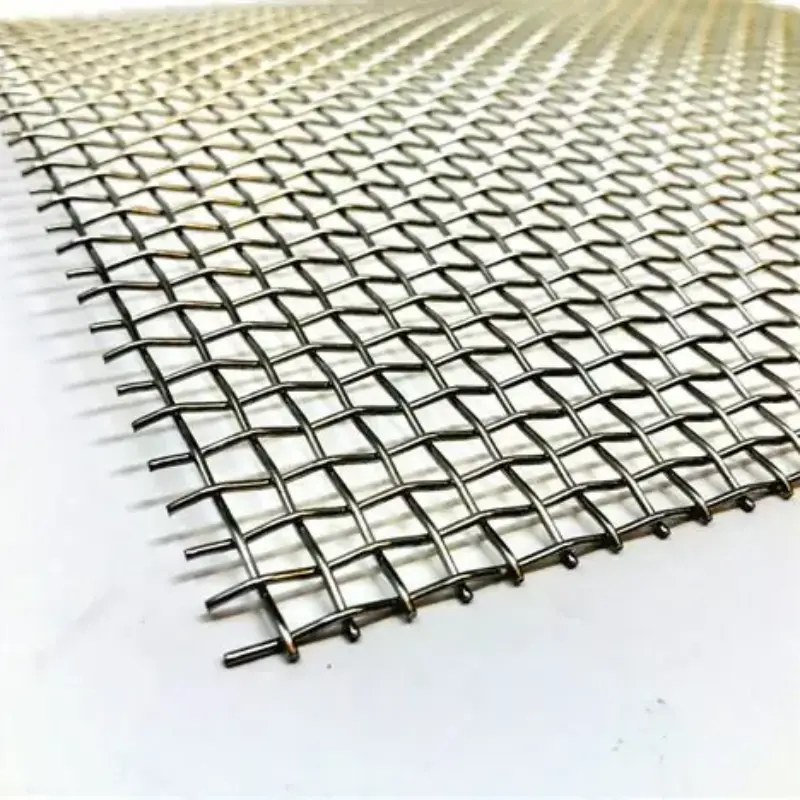
Zirconium Grade 702 (UNS R60702) · Plain / Twill / Dutch Weave Woven Wire Cloth
Material: Zr + Hf ≥ 99.2 % | Standards: ASTM B550, ASTM B551 | Density: 6.51 g/cm³ | Melting Point: 1,855 °C
1. Product Description
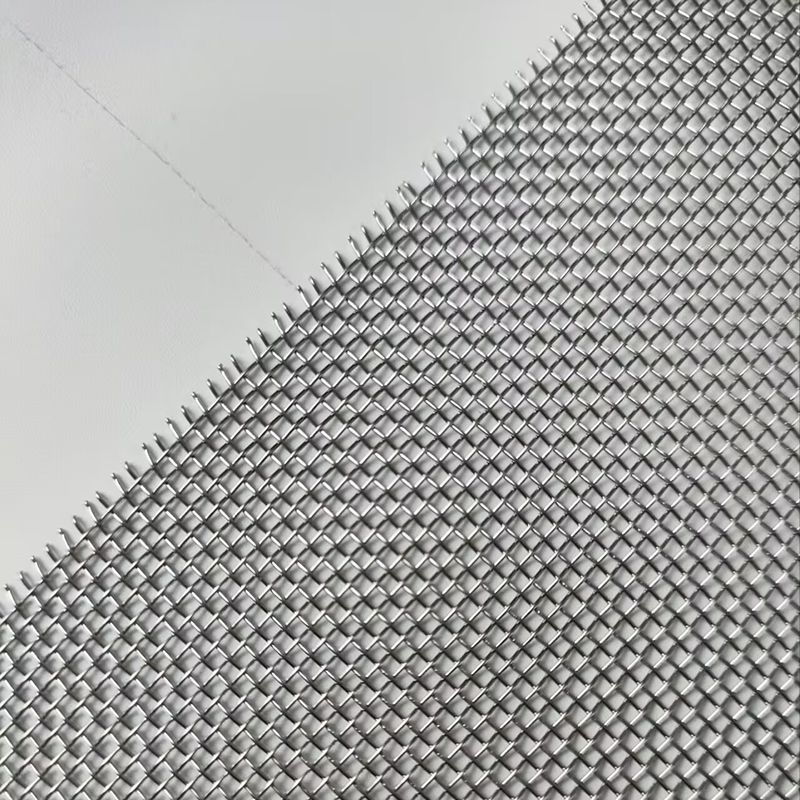
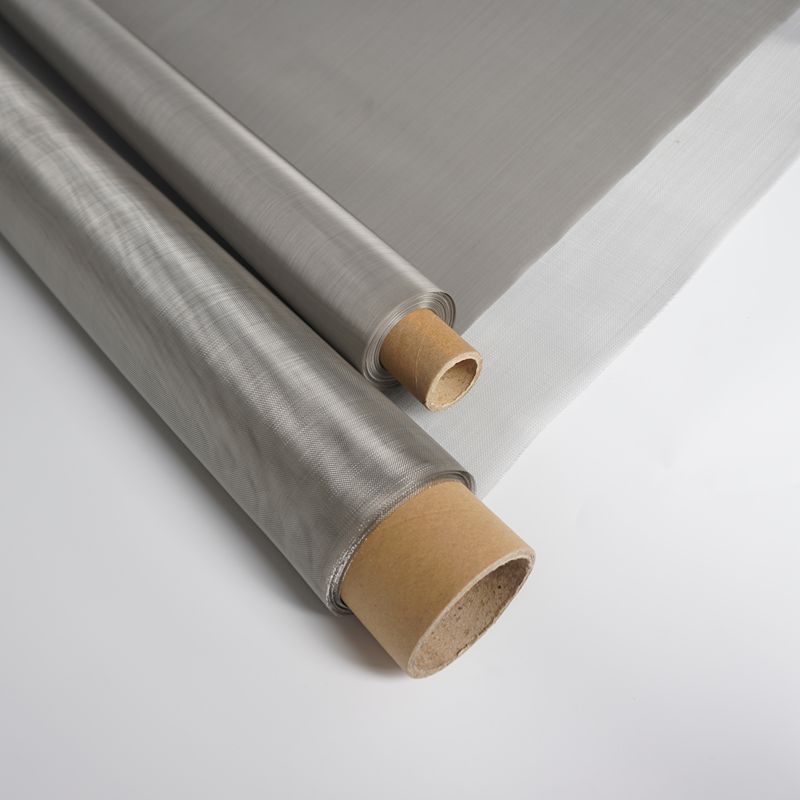
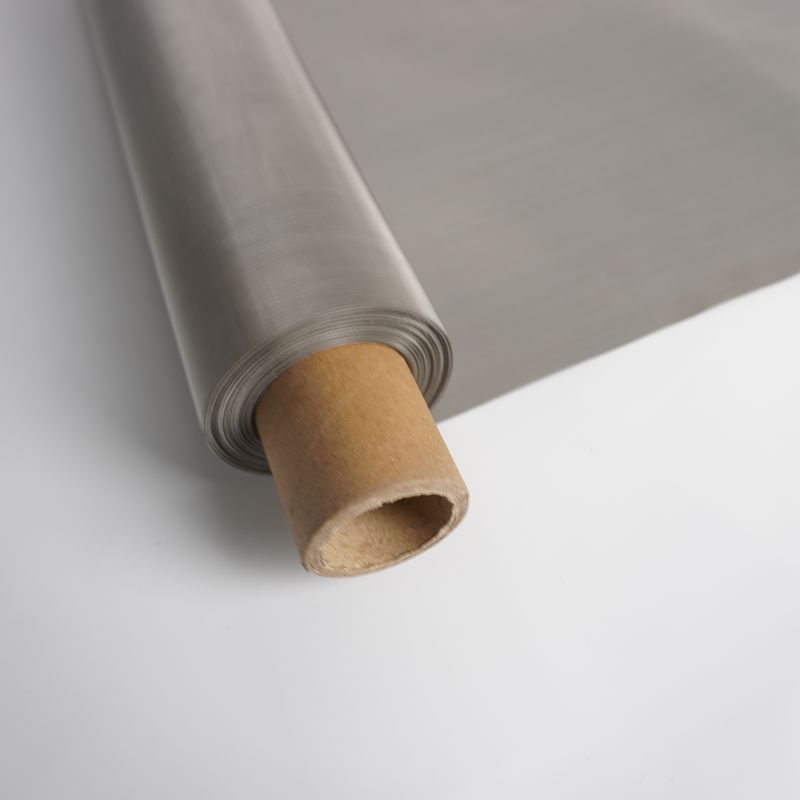
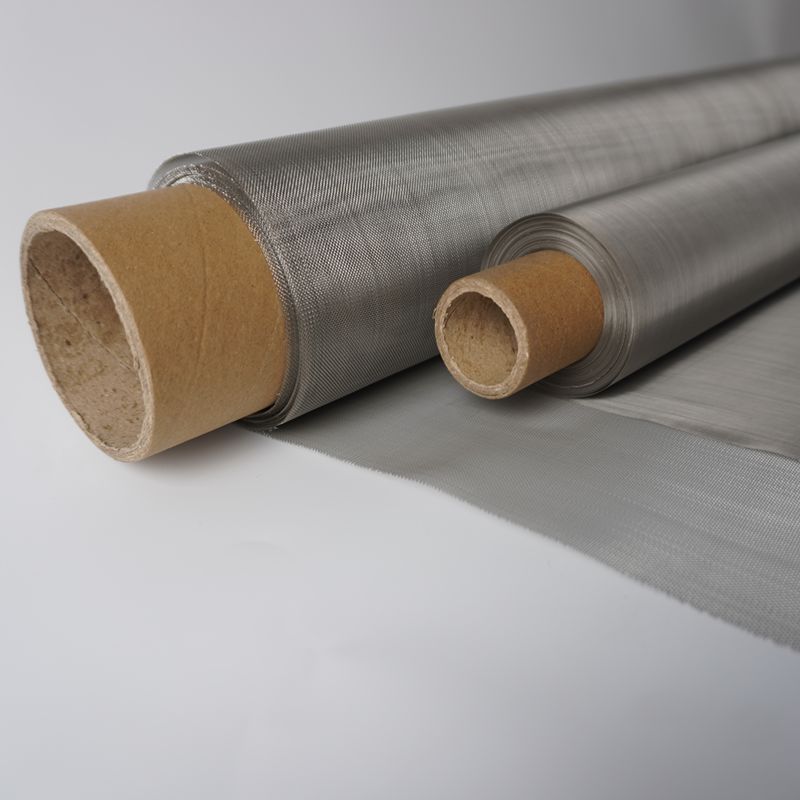
Zirconium wire mesh is a precision woven wire cloth manufactured from unalloyed zirconium wire, predominantly Zirconium Grade 702 (UNS R60702). It is produced on high-tension shuttle and rapier looms from cold-drawn, annealed zirconium wire, and is supplied as roll goods, cut panels, discs, cylinders or fabricated filter elements. The material is a reactive, corrosion-resistant metal with a silvery-white appearance, a density of 6.51 g/cm³ and a melting point of 1,855 °C; it is non-magnetic, non-toxic and fully recyclable.
Because zirconium spontaneously forms a thin, dense and self-healing oxide film on its surface, the metal behaves in aggressive chemical media far beyond the capability of stainless steel and, in hydrochloric acid in particular, beyond that of titanium. This oxide film is stable over a wide pH range and reforms instantly if the surface is scratched or abraded, which is the reason zirconium is specified for hydrochloric acid service, organic acid service and alkaline process streams where 316L, 904L or titanium suffer pitting, stress-corrosion cracking or general wastage.
In the nuclear industry, zirconium is valued for its very low thermal-neutron absorption cross-section (approximately 0.18 barns), combined with good strength and excellent corrosion resistance in high-temperature water and steam. Where the mesh is intended for in-core or nuclear-adjacent duty, a low-hafnium grade is supplied, since hafnium — chemically almost identical to zirconium — is a strong neutron absorber and is normally restricted to the 4.5 % maximum permitted by ASTM B550 for the standard commercial grade.
Zirconium wire mesh is woven in plain weave for general screening and filtration duty, in twill weave for finer apertures and greater mechanical stability, and in Dutch weave (plain or twill) where the shute wires are packed together to create a depth-type filter medium capable of retaining particles well below the capability of a square-mesh cloth. All meshes are woven to nominal aperture and are inspected for mesh count, wire diameter, aperture, open area and visual defects before despatch.
2. Material — Zirconium Grade 702 (UNS R60702)
2.1 Chemical Composition (ASTM B550 / B551, wt. %)
| Element |
Zr + Hf |
Hf |
Fe + Cr |
C |
N |
O |
H |
| Grade 702 (R60702) |
≥ 99.2 |
≤ 4.5 |
≤ 0.20 |
≤ 0.05 |
≤ 0.025 |
≤ 0.16 |
≤ 0.005 |
Values are maximum unless shown as minimum. A low-hafnium (nuclear) grade with Hf ≤ 0.01 % is available on request.
2.2 Physical Properties (20 °C)
| Property |
Value |
Property |
Value |
| Density |
6.51 g/cm³ |
Melting point |
1,855 °C |
| Modulus of elasticity |
99 kN/mm² |
Thermal conductivity |
22 W/(m·K) |
| Specific heat capacity |
285 J/(kg·K) |
Electrical resistivity |
≈ 0.42 µΩ·m |
| Coefficient of thermal expansion |
5.9 × 10⁻⁶ /K |
Thermal neutron cross-section |
≈ 0.18 barns |
Typical values for unalloyed zirconium; confirm against the mill certificate supplied with each lot.
2.3 Mechanical Properties (annealed, 20 °C)
| Tensile strength Rm |
0.2 % Yield strength Rp0.2 |
Elongation A |
Hardness |
Condition |
| ≥ 380 MPa |
≥ 205 MPa |
≥ 16 % |
≈ 160 HV |
Annealed / soft |
3. Weave Types and Construction
3.1 Plain Weave
Each warp wire passes alternately over and under each shute wire, producing a stable, symmetric square aperture with the highest open area of the three weave types. Plain weave is the standard choice for general screening, sieving and coarse-to-medium filtration, and is normally available from 1 to about 100 mesh. Its regular surface makes it the preferred construction for calendered or sintered laminates.
3.2 Twill Weave
Warp and shute wires pass over two and under two wires, so the wires are able to sit closer together. Twill weave therefore reaches finer apertures than plain weave at the same wire diameter, offers greater mechanical stability and better resistance to aperture distortion under load, at the cost of a slightly rougher surface and marginally lower open area.
3.3 Dutch Weave (Plain and Twill)
Dutch weave uses substantially larger warp wires and closely packed, much finer shute wires. The result is a deep, tortuous pore channel rather than a simple square hole, giving high dirt-holding capacity, high burst strength and reliable retention of particles far below the aperture of a square cloth. Twill Dutch weave is used for the finest ratings. Nominal construction ranges: warp wire 0.10–0.50 mm, shute wire 0.05–0.25 mm, warp × shute counts typically 12 × 64 up to 100 × 1,200, nominal filtration 20–300 µm.
Dutch weave filtration ratings are nominal and are confirmed by bubble-point test (ISO 2942 / ASTM E128) or glass-bead challenge on request.
4. Standard Specifications
The table below gives representative plain-weave constructions. Aperture and open area are calculated from nominal mesh count and wire diameter (aperture = 25.4 / mesh − wire diameter); unit weight is calculated from the woven geometry and the density of zirconium.
| Mesh / inch |
Wire Dia. (mm) |
Aperture (mm) |
Open Area (%) |
Weight (kg/m²) |
| 4 |
1.20 |
5.15 |
65.8 |
2.32 |
| 6 |
0.90 |
3.33 |
62.0 |
1.96 |
| 8 |
0.71 |
2.46 |
60.3 |
1.62 |
| 10 |
0.50 |
2.04 |
64.5 |
1.01 |
| 12 |
0.50 |
1.62 |
58.3 |
1.21 |
| 16 |
0.45 |
1.14 |
51.3 |
1.30 |
| 20 |
0.40 |
0.87 |
46.9 |
1.29 |
| 30 |
0.30 |
0.55 |
41.7 |
1.09 |
| 40 |
0.25 |
0.39 |
36.8 |
1.01 |
| 50 |
0.20 |
0.31 |
36.8 |
0.81 |
| 60 |
0.15 |
0.27 |
41.7 |
0.54 |
| 80 |
0.12 |
0.20 |
38.7 |
0.46 |
| 100 |
0.10 |
0.15 |
36.8 |
0.40 |
| 150 |
0.06 |
0.11 |
41.7 |
0.22 |
| 200 |
0.05 |
0.08 |
36.8 |
0.20 |
Reference values for plain weave. Other combinations of mesh and wire diameter, twill and Dutch weave constructions, and non-standard roll sizes are manufactured to order.
4.1 Supply Range
| Parameter |
Standard Range |
Remarks |
| Mesh count |
1 – 100 mesh (up to 200 mesh on request) |
Twill weave for the finer end of the range |
| Wire diameter |
0.05 – 2.00 mm |
Matched to mesh count and aperture requirement |
| Roll width |
up to 1,000 mm |
Slit to narrower widths on request |
| Roll length |
10 – 30 m |
Dependent on weave and wire diameter |
| Cut pieces |
panels, discs, rings, cylinders, cones |
Laser cut, water-jet cut or punched |
| Edge finish |
square cut, selvedge, reinforced edge |
Rolled or welded edges for filter elements |
| Surface |
bright annealed, pickled, polished |
Degreased and sealed for clean service |
5. Key Features
▪
Outstanding corrosion resistance — zirconium withstands hydrochloric acid, sulphuric acid, organic acids, alkalis and most salt solutions where stainless steels and titanium fail.
▪
Self-healing passive oxide film — the protective film reforms immediately after scratching, abrasion or cutting, so cut edges and fabricated parts retain full corrosion resistance.
▪
High melting point and thermal stability — 1,855 °C melting point allows continuous service in high-temperature process streams, furnaces and hot acid environments.
▪
Low neutron absorption — approximately 0.18 barns, making the material transparent to thermal neutrons in reactor and nuclear-adjacent applications.
▪
Precise, uniform aperture — computer-controlled looms and in-process gauging give consistent mesh count, wire diameter and open area across the full roll width.
▪
High open area, low pressure drop — up to about 65 % open area in coarse plain weave, giving high flow capacity with minimal differential pressure.
▪
Good strength with useful ductility — ≥ 380 MPa tensile strength and ≥ 16 % elongation allow crimping, rolling, deep forming and welding without cracking.
▪
Non-magnetic, non-toxic, biocompatible — suitable for medical, pharmaceutical and food-contact filtration.
▪
Fully traceable — each lot is delivered with a mill test certificate and, on request, EN 10204 Type 3.1 inspection documents.
6. Advantages over Alternative Materials
Zirconium is a premium-priced material, and it is normally selected where the cost of corrosion failure, product contamination or maintenance shutdown exceeds the material premium. The comparison below shows where zirconium wire mesh outperforms the common alternatives.
| Criterion |
Zirconium Zr 702 |
Stainless Steel 316L |
Titanium Gr. 2 |
| Hydrochloric acid |
Excellent over wide concentration / temperature range |
Poor — rapid attack |
Poor — attacks readily |
| Sulphuric acid |
Very good, including hot dilute and moderate concentrations |
Limited to dilute, low temperature |
Limited; attacked above ~5 % |
| Organic acids & alkalis |
Excellent |
Good to moderate |
Good |
| Oxidising media (FeCl₃, CuCl₂, wet Cl₂) |
Not recommended |
Poor |
Good |
| Hydrofluoric acid |
Not recommended |
Poor |
Poor |
| Density |
6.51 g/cm³ |
8.00 g/cm³ |
4.51 g/cm³ |
| Melting point |
1,855 °C |
≈ 1,400 °C |
1,668 °C |
| Thermal neutron absorption |
Very low (≈ 0.18 barns) |
High |
Low but higher than Zr |
| Relative material cost |
High |
Low |
Medium |
Qualitative comparison for material selection guidance; final selection should be confirmed against the actual process medium, concentration and temperature.
7. Typical Applications
▪
Chemical processing — hydrochloric acid pickling lines, acid recovery and regeneration units, heat exchanger tube bundles and demisters, reactor internals, distillation and stripping column packing support, catalyst retention screens, sulphuric acid coolers and concentrators.
▪
Nuclear industry — reactor internals, fuel assembly support and spacer components, control rod guide structures, moderator and coolant circuits, and shielding-related filtration where low hafnium grade is specified.
▪
Aerospace and defence — high-temperature filters, rocket motor and propulsion components, heat shields, and structural screens where weight, temperature resistance and corrosion resistance are combined.
▪
Medical and pharmaceutical — implant and surgical instrument components, filtration and separation media for aggressive sterilising chemicals, and biocompatible support structures.
▪
Electronics and vacuum technology — getter supports, electrode and grid structures, sputtering and high-vacuum furnace furniture, sintering trays and heating element supports.
▪
Marine and desalination — seawater filtration, heat exchanger screens and marine exhaust and scrubber components exposed to chlorides.
▪
Optical and coating — coating frames, deposition masks and high-purity evaporation supports.
8. Quality Control and Documentation
▪
Incoming material — zirconium wire verified against the mill certificate: chemistry (Zr + Hf, Hf, Fe, Cr, C, N, O, H), diameter tolerance and surface condition.
▪
In-process inspection — mesh count, wire diameter, aperture and open area checked at the start, middle and end of every roll; loom tension and reed condition monitored continuously.
▪
Final inspection — 100 % visual examination for broken wires, reeds, shute distortion and contamination; dimensional check of roll width and length.
▪
Documentation — material test report to EN 10204 Type 3.1 issued with every shipment; additional bubble-point, air permeability or particle-retention reports available on request.
9. Packing and Ordering Information
Mesh is wound on a paper core, wrapped in moisture-barrier film and packed in a plywood case or on a pallet with edge protection. Each package carries the material grade, mesh count, wire diameter, roll size, lot number and net/gross weight. Custom labels, neutral packing and customer-specified case marking are available.
To quote accurately, please state: (1) material grade, e.g. Zr 702 or low-hafnium grade; (2) mesh count and wire diameter, or the required aperture in mm or µm; (3) weave type — plain, twill or Dutch; (4) roll width × length, or the drawing for cut parts; (5) quantity; and (6) any inspection, certification or packing requirement.
Note: the property values in this data sheet are typical values for unalloyed zirconium Grade 702 and are given for engineering guidance. They are not a substitute for the mill certificate supplied with the actual goods, nor for a project-specific material review.