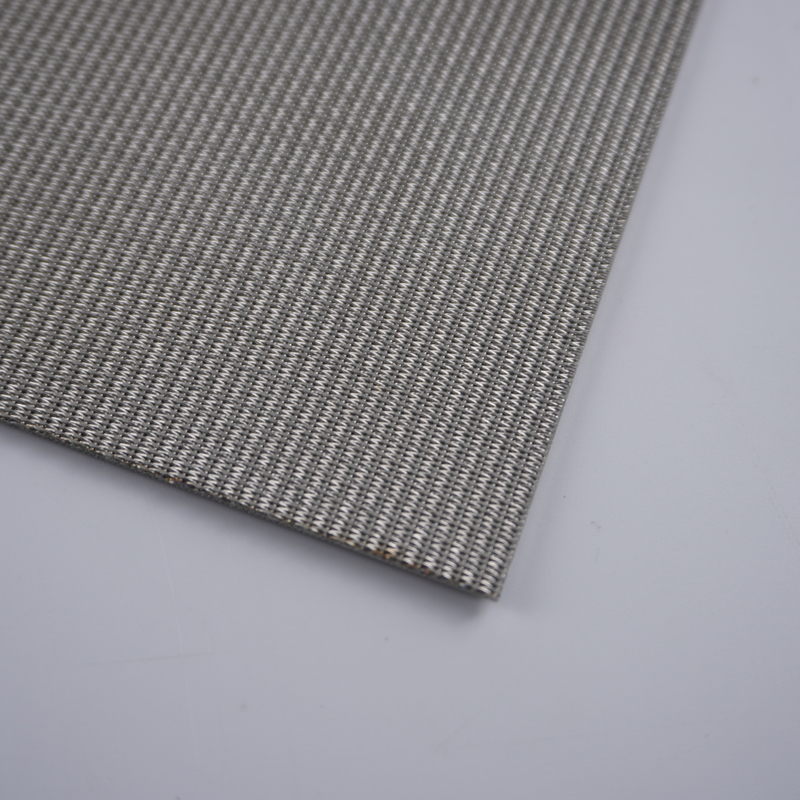
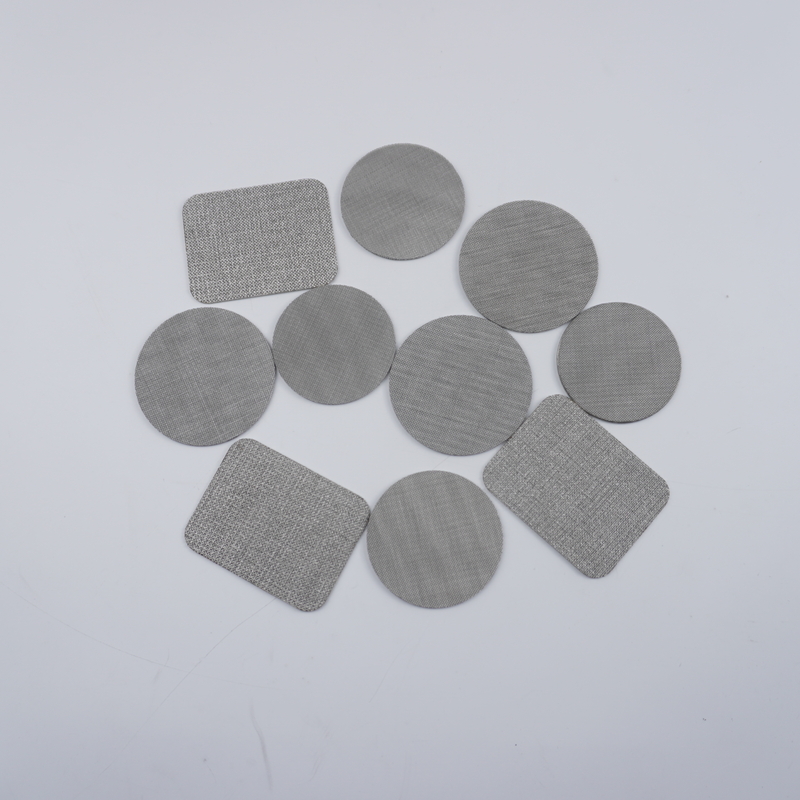
Multi-layer sintered stainless steel wire mesh, sheets and filter elements
Product technical dossier | Rev. 1.0 | September 2026
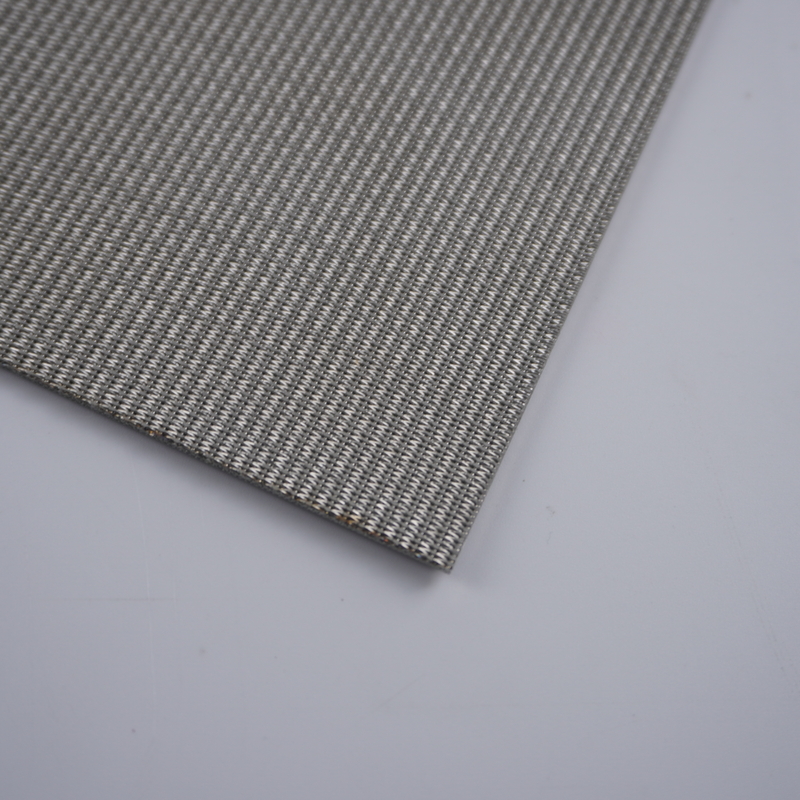
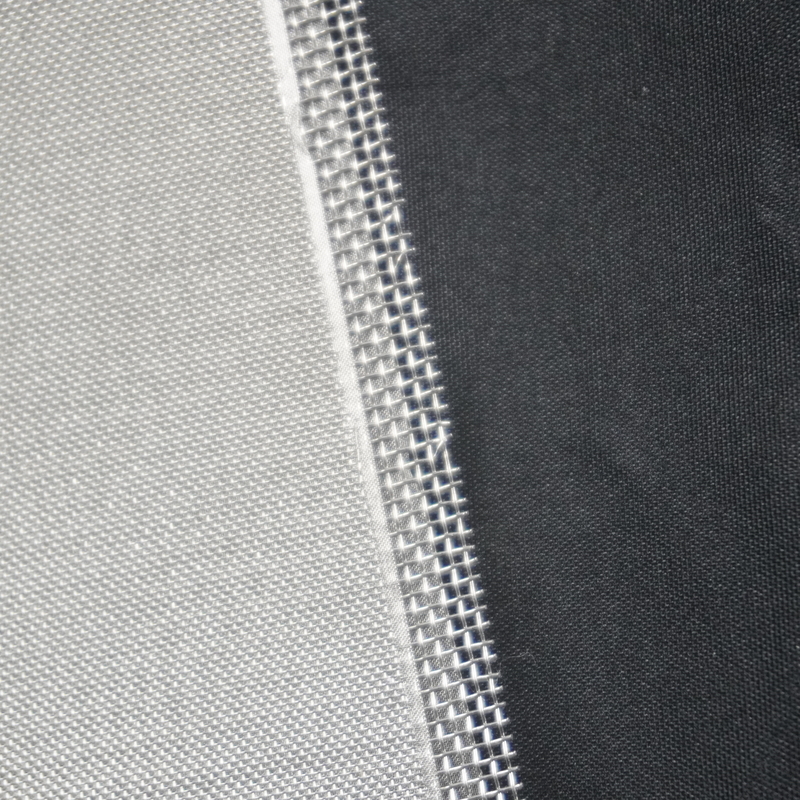
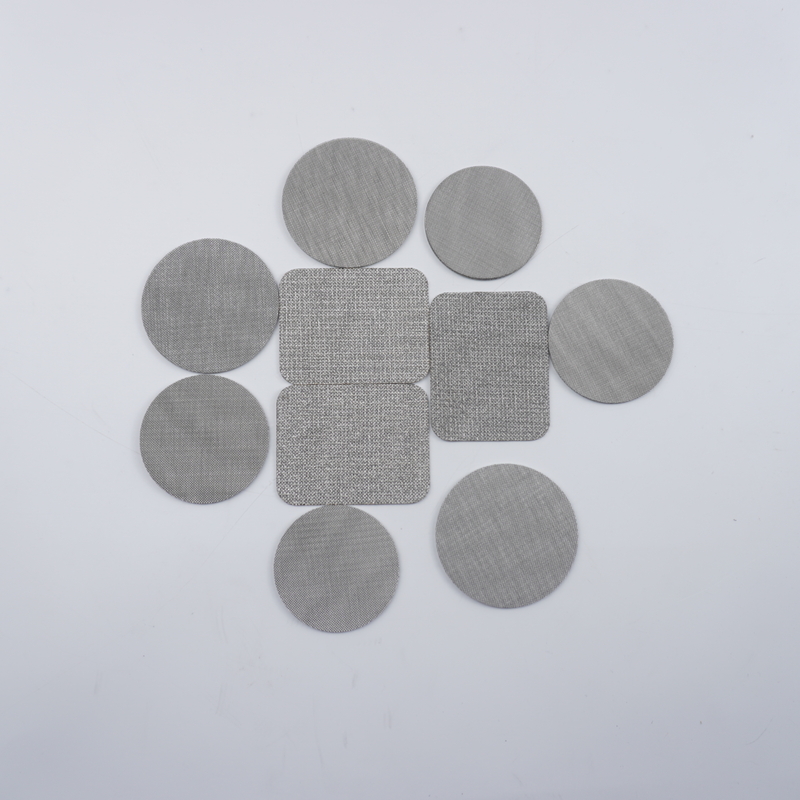
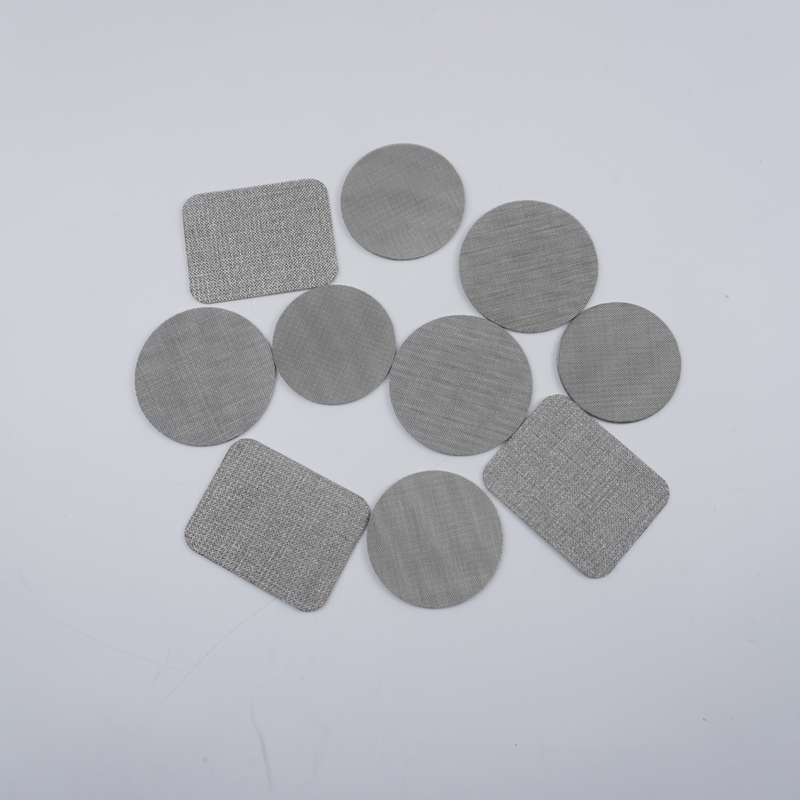
Multi-layer sintered metal wire mesh is produced by stacking two to six layers of stainless steel wire cloth in a defined sequence and bonding them into one rigid porous sheet by vacuum sintering, followed by pressing and rolling. Every contact point between layers is metallurgically bonded, so the finished medium is a single self-supporting body with no adhesive, no binder and no risk of delamination in service. Bolin supplies the medium as flat sheets, discs and rings, and fabricates it into filter elements including cylindrical cartridges, discs, baskets, cones, pleated cores and air-distribution plates.
Key facts at a glance
| Product |
Multi-layer sintered metal wire mesh (2 to 6 layers) |
| Filtration rating |
1 µm to 100 µm (nominal) |
| Standard materials |
SS304, SS304L, SS316, SS316L |
| Special alloys on request |
Hastelloy C-276, Monel 400, Inconel 600, SS904 / 904L, duplex stainless 2205 |
| Sheet size range |
500 × 1000 mm up to 1200 × 1500 mm |
| Nominal thickness |
1.7 mm (5-layer) / 3.5 mm (6-layer) |
| Porosity |
approx. 37 % (5-layer, 1.7 mm) |
| Max. service temperature |
480 °C |
1. Layer structure
The standard five-layer construction distributes the three functions of a filter medium — protection, particle retention and mechanical support — across separate layers, so each duty can be optimised independently.
| Layer |
Function |
Duty in service |
| 1 (top) |
Protective layer |
Coarse mesh that shields the control layer from mechanical damage during handling, installation and operation. |
| 2 |
Control layer |
Determines the nominal filtration rating and the bubble point of the finished medium. |
| 3 |
Distribution layer |
Spreads the flow across the full surface and lowers local velocity, evening out loading. |
| 4 and 5 |
Reinforcement layers |
Act as the load-bearing structure and give the sheet its compressive strength, pressure resistance and rigidity. |
Six-layer option: adding a 12-mesh layer on top of the standard five-layer stack produces a 6-layer mesh of 3.5 mm nominal thickness with noticeably higher pressure resistance.
2. Type A — standard five-layer structure
Type A is the most widely used standard construction: five layers of stainless steel wire cloth stacked in a fixed sequence, then sintered, pressed and rolled. It covers the full 1–100 µm filtration range with stable performance.
| Model |
Nominal rating (µm) |
Layer structure |
Air permeability (L/min·cm²) |
Bubble point (mmH₂O) |
| A5-1 |
1 |
100 + 400×2800 + 100 + 12×64 + 64×12 |
1.81 |
360–600 |
| A5-2 |
2 |
100 + 325×2300 + 100 + 12×64 + 64×12 |
2.35 |
300–590 |
| A5-5 |
5 |
100 + 200×1400 + 100 + 12×64 + 64×12 |
2.42 |
260–550 |
| A5-10 |
10 |
100 + 165×1400 + 100 + 12×64 + 64×12 |
3.00 |
220–500 |
| A5-15 |
15 |
100 + 165×1200 + 100 + 12×64 + 64×12 |
3.41 |
200–480 |
| A5-20 |
20 |
100 + 165×800 + 100 + 12×64 + 64×12 |
4.50 |
170–450 |
| A5-25 |
25 |
100 + 165×600 + 100 + 12×64 + 64×12 |
6.12 |
150–410 |
| A5-30 |
30 |
100 + 450 + 100 + 12×64 + 64×12 |
1.70 |
120–390 |
| A5-40 |
40 |
100 + 325 + 100 + 12×64 + 64×12 |
6.86 |
100–350 |
| A5-50 |
50 |
100 + 250 + 100 + 12×64 + 64×12 |
8.41 |
90–300 |
| A5-75 |
75 |
100 + 200 + 100 + 12×64 + 64×12 |
8.70 |
80–250 |
| A5-100 |
100 |
100 + 150 + 100 + 12×64 + 64×12 |
9.10 |
70–190 |
How to read the layer structure: mesh counts are listed from the protective layer downwards. For example, in A5-10 the structure is a 100-mesh protective layer, a 165×1400 Dutch-weave control layer, a 100-mesh distribution layer, and two reinforcement layers of 12×64 and 64×12 mesh. Dashed values denote a plain-weave layer, "A×B" a twilled Dutch weave.
| Property (5-layer, 1.7 mm) |
Value |
| Layer thickness |
1.7 mm nominal |
| Open area / porosity |
approximately 37 % |
| Weight, 5-layer |
8.4 kg/m² |
| Weight, 6-layer |
14.4 kg/m² |
| Thickness tolerance after rolling |
± 0.01 mm |
| Standard sheet sizes |
500 × 1000, 600 × 1200, 1000 × 1000, 1200 × 1200, 1200 × 1500 mm |
| Custom sizes |
available within the ranges above |
3. Air flow and pressure drop
Pressure drop rises with flow rate and falls sharply as the filtration rating becomes coarser. The values below are measured on the standard Type A medium in air and are used for sizing and for comparing grades.
| Nominal rating (µm) |
Pressure drop at 2 L/min·cm² (mmH₂O) |
Pressure drop at 5 L/min·cm² (mmH₂O) |
| 2 |
86.7 |
233.6 |
| 5 |
80.3 |
221.4 |
| 10 |
58.3 |
187.0 |
| 15 |
47.7 |
161.4 |
| 20 |
33.1 |
118.2 |
| 25 |
22.6 |
83.4 |
| 30 |
20.2 |
76.3 |
| 40 |
18.9 |
69.0 |
| 50 |
14.7 |
58.1 |
| 75 |
9.9 |
43.1 |
4. Type B — high-permeability square-weave structure
Type B is built from multiple layers of plain square-hole weave mesh. Because the open area of square weave is high, the resulting medium combines high permeability with low resistance and large flux. The layer combination can be customised, since each woven layer offers a wide choice of openings.
| Model |
Layer structure |
Rating (µm) |
Thickness (mm) |
Weight (kg/m²) |
Porosity (%) |
| B2-0.5T |
Filter layer + 60 |
2–100 |
0.5 |
1.6 |
60 |
| B3-0.7T |
60 + filter layer + 60 |
2–100 |
0.7 |
2.4 |
56 |
| B3-1.0T |
50 + filter layer + 20 |
20–200 |
1.0 |
3.3 |
58 |
| B3-2.0T |
Filter layer + 20 + 8.5 |
20–250 |
2.0 |
6.5 |
58 |
| B4-1.0T |
60 + filter layer + 40 + 20 |
2–200 |
1.0 |
4.4 |
44 |
| B4-1.7T |
40 + filter layer + 20 + 16 |
2–200 |
1.7 |
6.2 |
54 |
| B4-1.8T |
16 + 20 + 24/110 |
125 |
1.83 |
6.7 |
46 |
| B5-1.9T |
30 + filter layer + 60 + 20 + 16 |
2–200 |
1.9 |
5.3 |
52 |
| B5-2.5T |
80 + filter layer + 30 + 10 + 8.5 |
2–200 |
2.5 |
8.8 |
55 |
| B7-2.0T |
50 + filter layer + 40 + 20 + 40 + filter layer + 50 |
2–150 |
2.0 |
7.4 |
58 |
Notes: (1) Where the filtration precision requested falls inside our standard range, the filter layer is selected to suit the customer. (2) Non-standard layer combinations can be produced to order. (3) A 40 µm filter layer is our standard reference construction.
5. Type C — perforated plate supported structure
Type C combines a perforated plate with multi-layer stainless steel wire mesh in one sintered body. The perforated plate acts as a load-bearing core, so compressive and mechanical strength are markedly higher than an unsupported mesh stack. It is supplied as cylinders, discs and flat sheets, and is used in food and beverage, water treatment, power-station dust removal, pharmaceutical and membrane processes.
| Model |
Layer structure |
Rating (µm) |
Thickness (mm) |
Weight (kg/m²) |
Porosity (%) |
| C4-2.0T |
30 + filter layer + 30 + Φ4×5p × 1.0T |
2–200 |
2.0 |
6.7 |
57 |
| C4-2.5T |
30 + filter layer + 30 + Φ5×7p × 1.5T |
2–200 |
2.5 |
9.8 |
50 |
| C4-1.5T |
60 + filter layer + 30 + Φ1.5×3p × 1.0T |
2–100 |
1.5 |
8.2 |
30 |
| C5-3.0T |
60 + filter layer + 60 + 20 + Φ6×8p × 2.0T |
2–200 |
3.0 |
11.8 |
50 |
| C5-4.0T |
20 + filter layer + 20 + 10 + Φ8×10p × 2.5T |
2–200 |
4.0 |
14.2 |
55 |
| C5-4.3T |
20 + filter layer + 20 + 10 + Φ10×13p × 3.0T |
5–200 |
4.3 |
16.9 |
50 |
Notes: (1) The filter layer is selected to match the filtration range requested by the customer. (2) Other special structures can be produced to order. (3) Porosity values are referenced to a 20 µm filter layer.
6. Type D — cross-laid dense mesh structure
Type D is made by crossing two or three layers of identical plain dense weave mesh and bonding them by sintering, pressing and rolling. The resulting pore network is evenly distributed and permeability is highly stable from batch to batch. Typical duties are fluidised beds, powder conveying, silencing, drying and cooling. Available forms include cone filters, centrifugal filters, regenerator cores and pleated or wedge-wire filter cores.
- Regenerator core: 600–700 layers of square-hole woven mesh stacked at a controlled weave angle and vacuum sintered. Porosity, flow resistance, weight, external dimensions and cleanliness are held consistent piece to piece. Available in 304, 304L, 316L, 310S and Inconel 625.
- Pleated filter core: stainless steel fibre sintered felt combined with stainless steel woven mesh. High porosity, large filtration area, strong nano-particle capture and excellent reusability; filtration rating down to 3 µm. Used for polymer and pharmaceutical melts, hydraulic oil, water treatment and high-temperature gas filtration.
- Wedge-wire filter core: wedge wire wound onto a support rod by welding, with a rating of 30–800 µm. Offered as filter plates, baskets and cartridges; strong, hard, corrosion resistant and easy to clean by backflushing. Used in petroleum, chemical, pharmaceutical, food, metallurgy, coal and water treatment service.
7. Material composition
The standard medium is made from austenitic stainless steel. Grades containing molybdenum (316 / 316L) are preferred for filtration duty because they tolerate chlorides and process media noticeably better than 304.
| Grade |
Standard / UNS / EN |
Key characteristics |
| SS304 / SUS304 |
ASTM A240 · UNS S30400 · EN 1.4301 |
General-purpose austenitic stainless steel; good corrosion resistance in fresh water, mild chemicals and food media. |
| SS304L / SUS304L |
UNS S30403 · EN 1.4307 |
Low-carbon variant (C max. 0.030 %); reduced risk of sensitisation after welding, suitable for welded elements. |
| SS316 / SUS316 |
UNS S31600 · EN 1.4401 |
Molybdenum-bearing austenitic grade; better resistance to chlorides and to pitting than 304. |
| SS316L / SUS316L |
UNS S31603 · EN 1.4404 |
Standard grade for our filtration media: low carbon, Mo-bearing, ideal for chemical, pharmaceutical and marine service. |
| Hastelloy C-276 |
UNS N10276 · EN 2.4819 |
Nickel-molybdenum alloy for strongly oxidising and reducing media, wet chlorine and chlorides. |
| Monel 400 |
UNS N04400 |
Nickel-copper alloy; resistant to seawater, hydrofluoric acid and alkaline media. |
| Inconel 600 |
UNS N06600 |
Nickel-chromium alloy with good high-temperature strength and oxidation resistance. |
| SS904 / 904L |
UNS N08904 · EN 1.4539 |
Super-austenitic grade with high Mo and Cu; strong resistance to sulphuric and phosphoric acid. |
| Duplex 2205 |
UNS S31803 / S32205 · EN 1.4462 |
Ferritic-austenitic grade with roughly twice the yield strength of 316L and high chloride stress-corrosion resistance. |
Typical chemical composition of the standard grades (weight %)
| Grade |
C max. |
Cr |
Ni |
Mo |
Balance |
| SS304 |
0.07 |
18.0–20.0 |
8.0–10.5 |
— |
Fe |
| SS304L |
0.030 |
18.0–20.0 |
8.0–12.0 |
— |
Fe |
| SS316 |
0.08 |
16.0–18.0 |
10.0–14.0 |
2.00–3.00 |
Fe |
| SS316L |
0.030 |
16.0–18.0 |
10.0–14.0 |
2.00–3.00 |
Fe |
Values are typical ranges per ASTM A240 / EN 10088-2 and exclude residual elements and minor additions (Mn, Si, P, S, N). Material certificates to EN 10204 3.1 can be supplied on request.
8. Performance characteristics
- Wide filtration range — reliable performance across 1 µm to 100 µm in a single product family.
- Stable pore size — the control layer is protected by the layers above and below it, so the pore structure does not deform in service.
- High mechanical strength — the fourth and fifth layers carry the load, giving high compressive strength and mechanical rigidity.
- Easy to clean and backflushable — filtration takes place at the surface layer, and the smooth outer face sheds filter cake readily, which makes the medium particularly suited to reverse-flow cleaning.
- Heat resistant — continuous service up to 480 °C.
- Corrosion resistant — 316L construction for aggressive process media.
- Fully machinable — cutting, bending, punching, drawing and welding using standard fabrication methods.
- Consistent quality — permeability and bubble point are verified batch by batch (see section 9).
9. Quality control and testing
Each production batch passes the following inspection steps, and the corresponding records can be issued with the shipment.
| Inspection step |
Equipment |
What is verified |
| Incoming material |
Material inspection bench |
Mesh count, wire diameter, sheet dimensions and weaving defects of every incoming roll. |
| Alloy verification |
Alloy analyser |
Alloy grade of incoming material and of the finished mesh; readings can be stored and printed. |
| Carbon / sulphur |
High-frequency infrared C-S analyser |
Accurate carbon and sulphur content of raw material and finished product. |
| Surface inspection |
Magnifier (60×) |
Weaving defects and local surface irregularities. |
| Microstructure |
Microscope (up to 450×) |
Pore structure and wire regularity; images can be stored. |
| Permeability |
Air flow tester |
Air flow curve of the sintered mesh, at one or several differential pressures as required. |
| Pore size |
Pore size analyser (ISO 4003) |
Filtration precision range and bubble point. |
| Strength |
Tensile tester |
Tensile strength and elongation, with data logging and printing. |
10. Applications
Sintered wire mesh is used wherever a filter medium has to survive high temperature, aggressive chemistry, high differential pressure or repeated cleaning cycles.
| Industry |
Typical duty |
| Petroleum and petrochemical |
Catalyst recovery, polymer and melt filtration, hydrotreater and refinery filter elements, sand control screens. |
| Chemical processing |
Solvent and process-liquid clarification, concentrated filter accessories (TPI, TDI, MDI, BDO service), acid filtration. |
| Pharmaceutical |
Powder drying and dust capture in fluid-bed dryers, collector elements, sterile gas and liquid filtration. |
| Food and beverage |
Clarification, steam filtration, CIP-cleanable elements, sparging and aeration. |
| Power generation |
Flue-gas dust removal, air fluidisation plates (air amplifier and air-break plates), fly-ash recovery in coal-fired plants. |
| Aerospace and new energy |
High-integrity gas and hydraulic filtration, regenerator cores for Stirling engines, gas diffusion layers. |
| Water treatment |
Automatic backwashing filters, circulating water and ballast water filtration, desalination pre-treatment. |
| Metallurgy and coal |
High-temperature gas filtration, dust collection, powder conveying and fluidised-bed distribution. |
Typical finished element forms
- Filter discs and rings — up to 3000 mm outside diameter, machined as a coherent body or as an assembled disc.
- Cylindrical filter elements — made from flat medium, wall thickness 2–5 mm (available below 3 mm on request); minimum inner diameter 10 mm; filtration rating down to 1 µm; connections and dimensions to customer drawing.
- Collector elements — for retaining dry pharmaceutical powder, with double-wall filtration inside and outside to maximise filter area and minimise product loss.
- Baskets, cones and centrifugal elements — for automatic backwashing filters, paints, coatings and food processes.
- Pleated cartridges — increased area for polymer, hydraulic oil and high-temperature gas duty.
Ordering information
- Medium type and layer combination (Type A / B / C / D, or drawing).
- Nominal filtration rating in µm, and whether nominal or absolute retention is required.
- Material grade (304, 304L, 316, 316L or special alloy).
- Dimensions: sheet size, or a drawing for discs, cylinders, baskets and pleated cores.
- End connections, sealing faces and any welding requirements.
- Quantity, and whether material certificates or inspection records are required.
Contact
| Address |
NO15, Building 1, B Zone, Wire Mesh World, Anping County, Hengshui City, Hebei Province, China 053600 |
| Mobile |
+86-170 6528 1888 |
| Tel |
86-0318-5280116 |
| Fax |
86-0318-7020860 |
| Website |
www.metalmeshfilters.com | www.bolinmetalmesh.com |
All technical data in this document are typical values measured on standard production and are given for engineering reference only; they do not constitute a warranty of performance in a specific application. Tolerances and final specifications are confirmed at the time of order. Please contact us before specifying a filter medium for a safety-critical duty.
Anping County Bolin Metal Wire Mesh Co., Ltd. | Focus on wire mesh manufacturing for more than 15 years.